"Space is an unforgiving environment that does not tolerate human errors or technical failure."
I have just finished reading Kurt Vonnegut's novel "The Sirens of Titan", which features a space traveler called Salo, who has been stranded in Saturn's moon Titan for 200,000 years (more on him later). I also followed a bit on the developments of the most recent Artemis II mission1. These 2 things made me wonder a simple question: are we an interstellar species? In other words, are humans capable of traveling to planetary systems beyond our own solar system?
The universe is a hostile place for life2. Just consider the entities we find outside our own planet. Physical dimensions are massive, distances are huge. Heavy radiation, extreme heat, extreme cold, and insurmountable gravity forces as those find in black holes, among others are the norm. That is the true natural world. Pulsars, quasars, super novae emitting heavy radiation, massive black holes sucking entire star systems, galaxies colliding, and centuries-old tornadoes inside gas giants are the natural world. Looks like apart from our planet, the universe is a violent place for life.
Space travel imposes several risks on the human body[1]. Here is a list with the effects of space travel on the human body, which emerge as a consequence of experiencing low gravity and space radiation: bone loss (space osteoporosis), muscle atrophy, cardiovascular change, altered vision, DNA mutations (as a result of radiation exposure), immune system changes, and naturally psychological distress (as a result of being confined in isolation for long periods of time). This not to mention the effects that g-forces have on the human body. Because, even if we were able to travel at a fraction of the speed of light, the acceleration of a space craft could be fatal if not performed gradually.
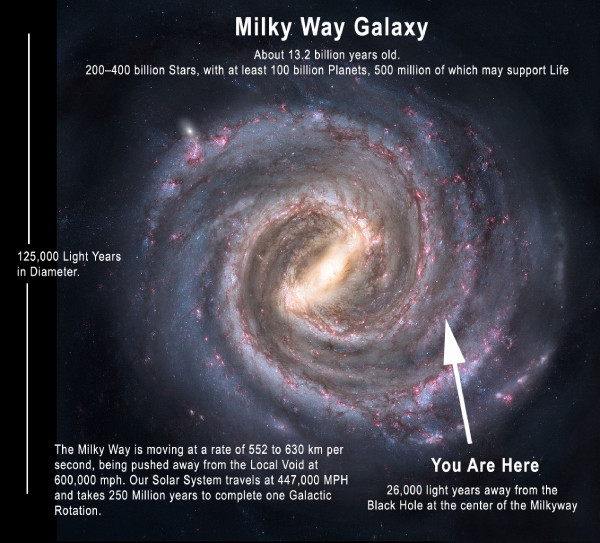
So, most likely: no, we are not an interstellar species. Not in our current form, at least. I see two possibilities for us to become one. Here I am playing to be a futurist. Number one, we undergo severe changes in the constituents of our bodies through genetic engineering as the same time as we further develop technology for artificial gravity and radiation protection, among other technological advances required to sustain life outside our planet. Number two, we merge with the machine, that is, we become an organism enhanced by robotics (homo ex machina).
Another possibility is that we do not become an interstellar species at all. We don't but our creation does, namely, the machine. In principle an embodied artificial intelligence could become a true explorer of deep space. This leads us to the Tralfamadorians from the novel "The Sirens of Titan".
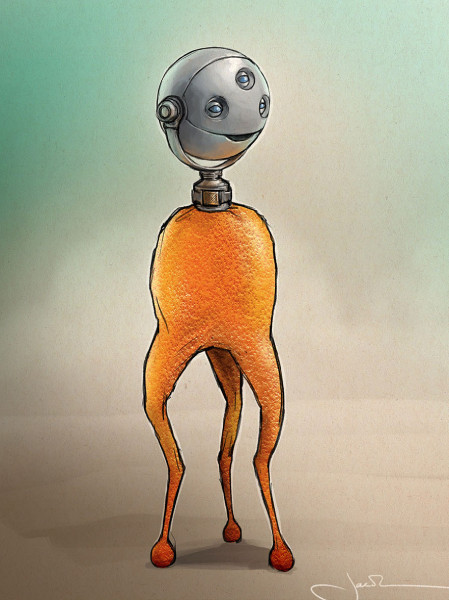
The Tralfamadorians are a race of machines3 that inhabit the planet Tralfamadore in the Small Magellanic cloud, which would make these creatures not only interstellar but also intergallactic. Long time ago, the Tralfamadorians superseded their organic builders, who perished for not having a discernible higher purpose. Salo, a Tralfamadorian, is a messenger en route from the planet Tralfamadore in the Small Magellanic Cloud into an extreme of the Milky Way. However, a small component in his space ship breaks, and he is left stranded on Titan for 200,000 years waiting for a replacement. When that arrives, he will have to travel for another 18 million years until reaching his final destination. So, what this fictional character is capable to undergo in terms of isolation and physical endurance in order to complete such a mission is beyond our current technology.
How close are we to developing a system for a fully autonomous space mission? The National Institute of Standards and Technology (NIST4) in the USA has developed a framework in which to assess the autonomy levels for unmanned systems (ALFUS). The metrics of this framework comprise 3 dimensions that answer these questions: how complex a mission is, what is the amount of human independence, and what is the environment's complexity. Such metrics result in an autonomy ladder that categorizes devices based on how independent they are from human intervention.
In the lowest level of autonomy, a system acts like a remote-controlled device requiring constant human input with no decision making; examples of this type of autonomy level are the first human-made satellites. In the next level, we have systems with reactive autonomy, which follow limited if-then-else logic; here we find examples like the Voyager space probes. Further in the autonomy ladder we have local decision makers, which are able to adapt to their environment in real time by making short-term decisions independently; here we find examples like the Curiosity and Perseverance rovers sent to Mars. These systems still follow human-defined goals. On top of the ladder we have fully autonomous systems which set goals and plans independent of human input, and they can adapt a mission's strategy based on external conditions. No device like this has been built yet.
Despite the amazing results in generative AI and large language models, current AI is far from developing a system that exhibits full autonomy in the ALFUS framework. What is missing? To start, a system that is capable of continuous learning, that is, a system that breaks the current machine learning cycle of training, deployment, data collection and retraining. Furthermore, current AI systems have a large compute footprint, which implies that most of the time they have to be executed in big data centers in the cloud.
In contrast, a fully autonomous system would have to learn continuously from its environment avoiding catastrophic forgetting5, be event-driven, energy efficient, and adaptive without external supervision. These are features of a system whose intelligence resembles that of some living organisms, in particular that of the human brain. Thus, it seems that the last level of autonomy can be achieved if we replicate the behavior of the brain. However, for that to happen thoroughly a new revolution in our current paradigm for computation needs to occur, one that goes beyond von Neumann computing architectures. Perhaps Salo the Tralfamadorian was built following such principles.
Footnotes
-
Actually, one of the objectives of the Artemis II mission was to test the effects of deep space travel on the human body.
↩
-
Here, I mean the universe as everything but our planet Earth.
↩
-
If a term such as race could be used here.
↩
-
From MNIST fame.
↩
-
This refers to a phenomenon in current machine learning techniques in which a system forgets what it has already learned when learning something new.
↩
- Actually, one of the objectives of the Artemis II mission was to test the effects of deep space travel on the human body. ↩
- Here, I mean the universe as everything but our planet Earth. ↩
- If a term such as race could be used here. ↩
- From MNIST fame. ↩
- This refers to a phenomenon in current machine learning techniques in which a system forgets what it has already learned when learning something new. ↩
References
-
Setlow, R. B. The hazards of space travel. EMBO Reports 4, 1013–1016 (2003).
↩
- Setlow, R. B. The hazards of space travel. EMBO Reports 4, 1013–1016 (2003). ↩